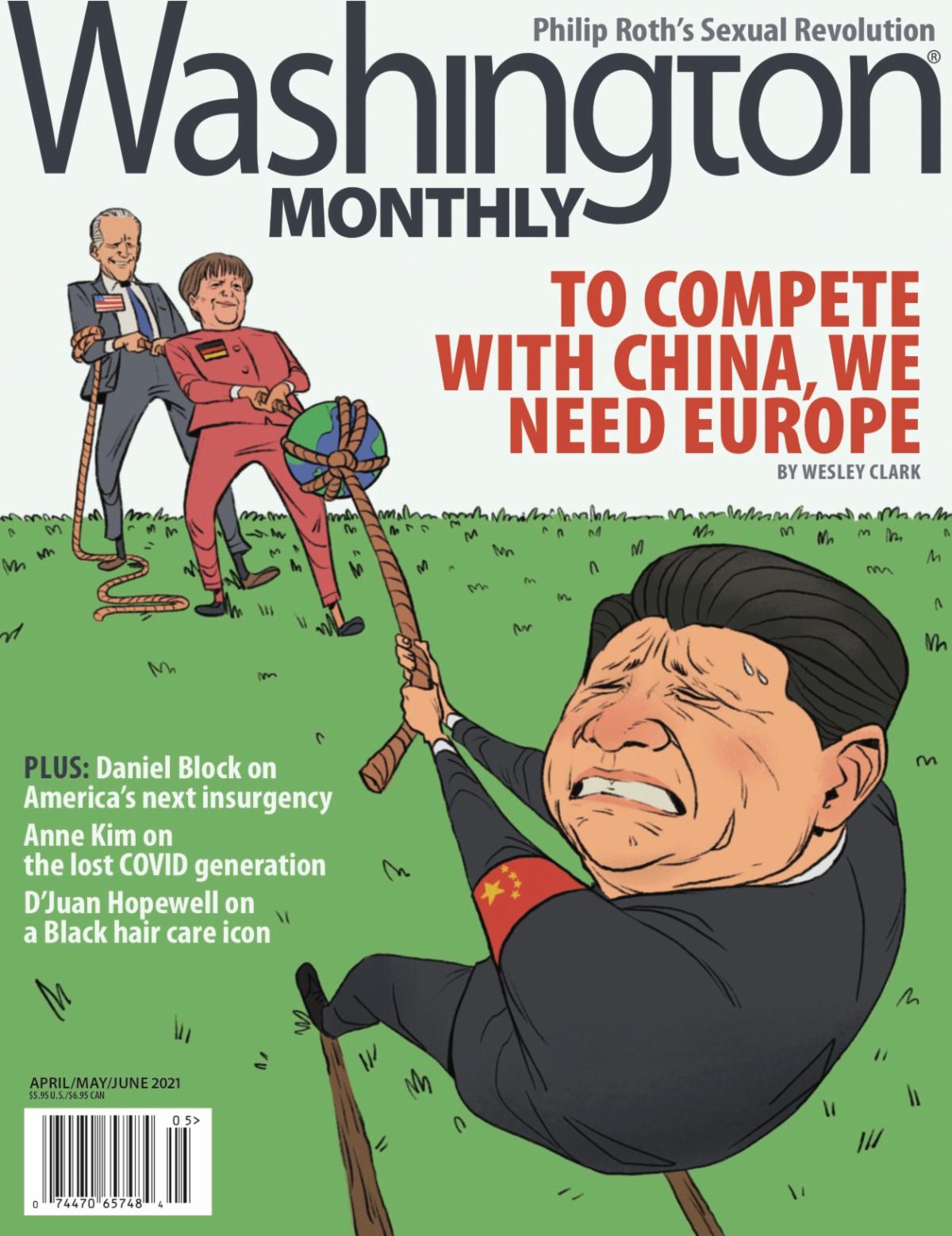
April / May / June 2021 Issue | | Over the last year, the United States has been rocked by domestic terrorism. In Wisconsin, a right-wing extremist shot and killed two people at a Black Lives Matter protest. In Oregon, a far-left activist murdered a Trump supporter. Racists across the country have assaulted and killed Asian Americans. And, of course, on January 6, a far-right mob occupied the Capitol to try and stop Joe Biden from becoming president. All of which led us to ask: Could the United States experience prolonged, acute civil violence? And if so, just how bad might it get? In the latest issue of the Washington Monthly, executive editor Daniel Block answers these questions. Based on interviews with current and former government officials, counterterrorism experts, and political scientists who study civil violence in the United States and other countries, he charts out what an insurgency—or even a civil war—would look like in present-day America. He lays out the tactical steps the government might take to stamp out violence, and how extremists could respond. Critically, he explores what reforms the country needs in order to avoid spiraling conflict. | | FEATURES
To manage the rise of China and other illiberal forces, the U.S. and Europe need a new kind of alliance. By Wesley K. Clark
The January 6 violence could signal the start of nationwide conflict not seen since the Civil War. Can we stop it? By Daniel Block
The pandemic has sidelined a generation of young adults. And the federal government’s only program to help them, Job Corps, sucks. By Anne Kim
It’s not enough just to fight discrimination. The government needs to take affirmative steps to make voting easier. By Ahmel Ahmed | | EDITOR'S NOTE
Two centuries ago, a fight for freedom in a distant land forced America to balance foreign policy idealism with realism. We need to find the right balance for today. By Paul Glastris | | ON POLITICAL BOOKS
A journalist’s fly-on-the-wall coverage of one small Ohio hospital reveals the deeper story of America’s broken medical system—and the heartland’s decline. By Phillip Longman
Madam C. J. Walker relied on other Black institutions and her own brazen determination to become one of the richest businesswomen in America. By D’Juan Hopewell
Conservation movements have won in the past. Can they do it again? By Christina Larson
The story of the e-commerce giant is the story of America's economic unraveling. By Daniel Block
Philip Roth had an idyllic childhood. How did he become America’s greatest chronicler of malcontents? By Eric Cortellessa | | Paul Glastris Editor in Chief Washington Monthly | | Support the Washington Monthly Help us stay ahead of the game when it comes to the big ideas that will make or break the fortunes of American liberalism in 2021 and beyond. Please consider making a donation or subscribing to our print magazine. © 2020 Washington Monthly, wholly owned by Washington Monthly Corporation, a District of Columbia 501(c)(3) nonprofit corporation. Washington Monthly trademark is registered in U.S. Patent & Trademark Office. | | 1200 18th Street NW, Suite 330 Washington, DC 20036 Phone: 202-955-9010 Fax: 202-955-9011 | | | | | | |
|









No comments:
Post a Comment