SaaStr |
- 10 Simple Ideas to Help Manage the Burn
- Bessemer: $1 Trillion in Cloud Market Cap Lost Year-to-Date
- Dear SaaStr: What’s a Big Check for an Investor?
- Dear SaaStr: How Old is “Too Old” To Start a SaaS Startup?
- Top SaaStr Content for the Week: 1Password CEO’s Secrets, Demandbase VP of Marketing’s Playbook, Atlassian COO, Intercom CEO, and More!
| 10 Simple Ideas to Help Manage the Burn Posted: 23 May 2022 07:24 AM PDT
So for many of us in SaaS, these are still the best of times. The Cloud is bigger than ever, CIOs are buying more than ever, and SaaS is still on a roll.
But public stock prices are way down, and venture capital is much tighter than it was just a few months ago. So many of you will want to manage the burn more carefully. But you can't cut your way to growth. So what should a CEO do? A few simple thoughts: 1. Let go of your bottom 20% of sales reps, concentrate leads in the best reps. This always gives you both a top-line boost (the top reps close more per lead), and gives you room to hire more reps at the same budget (to replace the 20%).
2. Have a firm, management-team wide burn rate budget. And stick to it. Pick a fixed amount of cash you can burn each month, period. And make all your VPs accountable to it. They can negotiate themselves on where to spend incremental revenue and dollars. More here.
3. Move on from any VP that isn't getting it done. They almost always overspend compared to the VPs that overperform. They hire mediocre folks on their team. And they overspend to try to make their plan. Dig deeper, and you'll almost always find your top VPs are the most capital efficient (all-in) and your weak VP(s) spend a ton but have little to show for it. Founders often hide a bit from the huge direct and indirect costs from low-performing VPs. More here.
4. Spend more time with existing customers. And go save the ones on the fence. I know this is a broken record on SaaStr, but it works. Relatively speaking, the easiest sales are from your existing customers. So go spend more time with them. And go save the ones on the fence. Some of your churn you really can't do anything about, but at least half the time, you can save the customer if you just show up or show up more often. That will often lead to a renew that's on the bubble. 5. Build an L4M Model, and update it every month. An L4M speaks with data, and it projects your revenue and burn rate more accurately than a "wish and a hope" model. You can't plan your burn if you can't model it. More on that here. 6. Get better at collections. Make sure you are collecting 100% of your MRR each month, ideally 110% if you do annual deals. Too many startups are better at closing deals than collecting the cash. More here.
7. Push a tiny bit for 2 years of cash on annual deals. This doesn't always work, but at the margin, offer a bigger discount for 2-3 years of cash on bigger deals. Later, this can sting you, as you are trading off more ARR for a tiny bit more cash. But in leaner times, it can be a good deal on a few of your larger deals. 8. Get the renewals out early, and work harder on them. Related to collections above, but too many startups make renewals too hard and wait too long for renewals checks. No matter what the contract says, get the renewal invoice out at least 60 days prior to expiration and ask for payment no later than the contract end date. Getting all your renewals paid on time can pull your cash forward 20% or more. 9. Make sure your sales comp plan rewards the high performers. Too many times, a sales comp plan is too flat, and pays out too equally. Change that. Make sure your top performers make a lot of money, and have accelerators. This is more capital efficient for you, too. 10. Get on the road. Go visit customers, and prospects. Show up to your bigger deals in person much more often. Be at all the top events in your industry — because your customers will be. This always gives your revenue a boost, at very little additional cost beyond a lot of time and a few airline tickets and hotel rooms. Applying the above can often extend your cash runway 20%-30% right there. Without making any other real changes, and without impacting growth at all.
The post 10 Simple Ideas to Help Manage the Burn appeared first on SaaStr. |
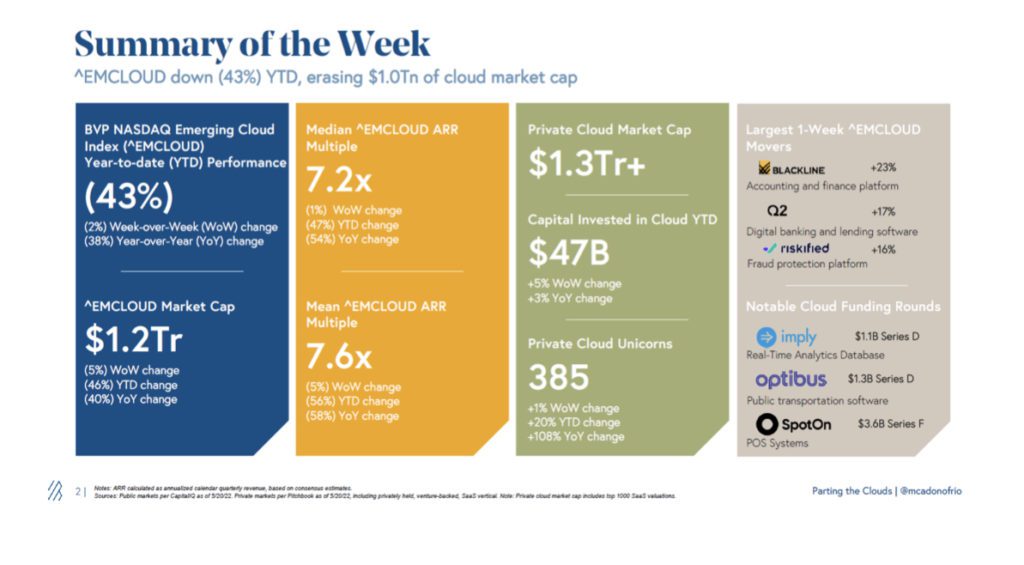
| Bessemer: $1 Trillion in Cloud Market Cap Lost Year-to-Date Posted: 23 May 2022 07:11 AM PDT There are many ways to slice-and-dice public market data, but the headline one Bessemer called out is the most visceral I've seen: Public SaaS and Cloud companies lost $1 Trillion in market cap so far in 2022.
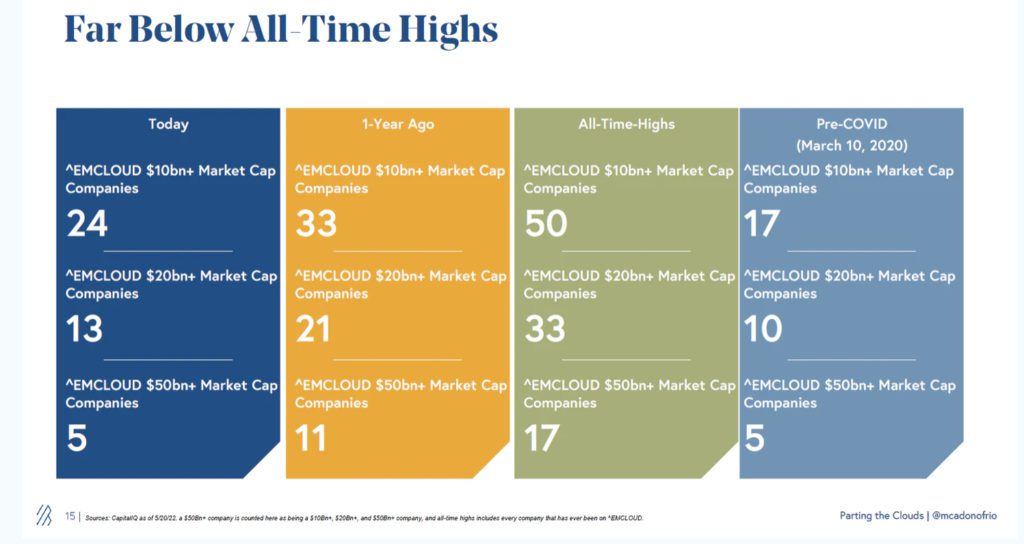
And the number of public SaaS and Cloud decacorns has fallen from 50 to 17. This puts a lot of pressure on all the private unicorns out there:
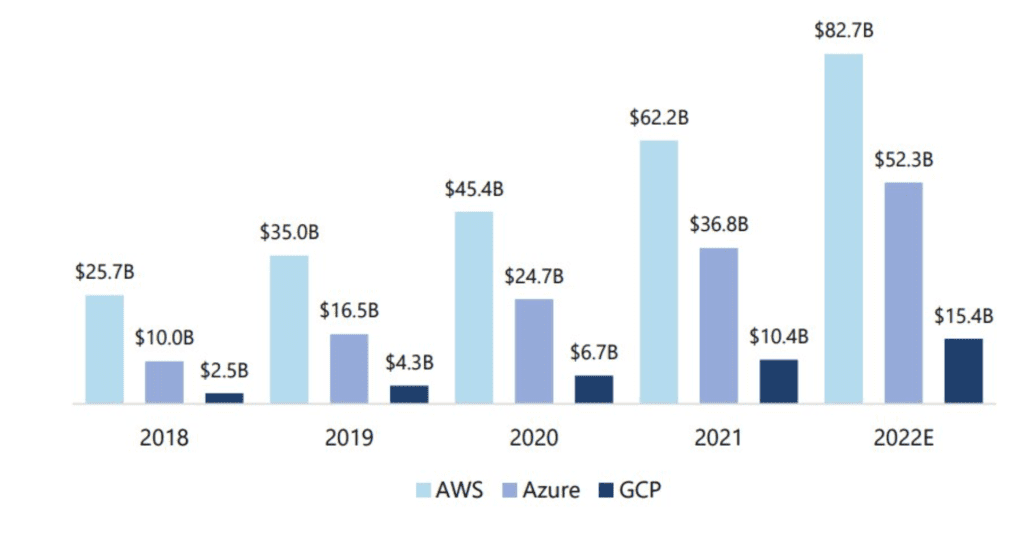
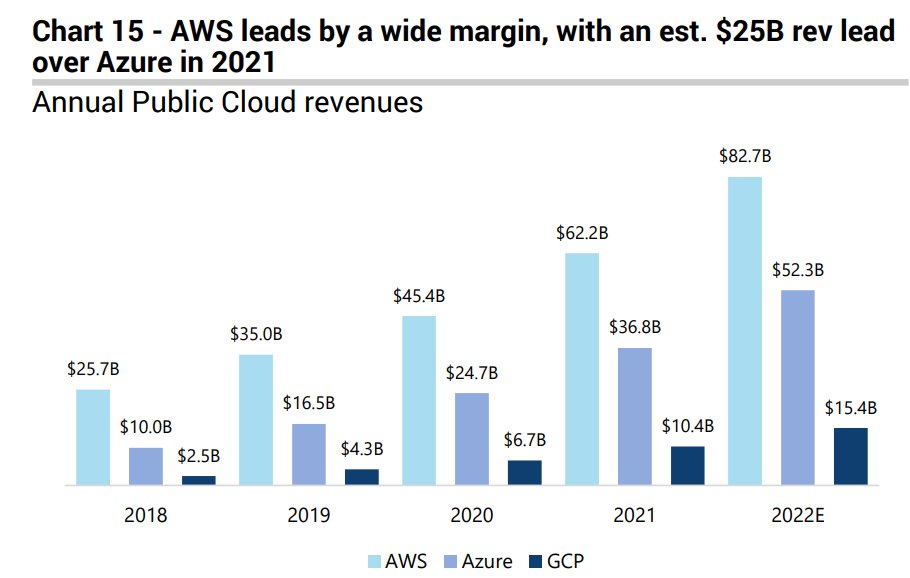
We did a deeper dive on decacorns here. At the same time, the leaders in Cloud (AWS, Azure, Google Cloud) are growing a stunning 40%. Growing at a pace and scale like we've never seen before:
That's got to be the most visceral juxtaposition in my time in SaaS. Cloud leaders lose $1 Trillion in market cap, at least for now … in the Best of Times for SaaS and Cloud. Strange Days, Indeed. The post Bessemer: $1 Trillion in Cloud Market Cap Lost Year-to-Date appeared first on SaaStr. |
| Dear SaaStr: What’s a Big Check for an Investor? Posted: 23 May 2022 06:06 AM PDT
A rough answer is more than 1.5%-2% of their fund size is a “lot of money” for most professional investors. 2% is a pretty standard target for most core VC investments, and more than that starts to become risky. And 5% or more of the fund into 1 deal starts to become a "this investment has to work or I might lose my job” investment. So take say a $150m venture fund:
Do this quick math to know where you stand with a VC. (note: an updated SaaStr Classic answer) The post Dear SaaStr: What’s a Big Check for an Investor? appeared first on SaaStr. |
| Dear SaaStr: How Old is “Too Old” To Start a SaaS Startup? Posted: 22 May 2022 07:02 AM PDT
IMHE it's about a state of mind.. Let me try to add some practical answers: 1. First, you need to give it a full 24 month commitment to hit Initial Traction. 6 months isn’t enough. 12 isn’t. It’s going to take you 9-12 months just to get the product right. And another 6-12 to get any material revenues. >> Can you “afford” to commit for 24 months just to get to Something? If not, you are too “old”. Even if you are just 22. Slack went from $0 to $12m in ’14. But it wasn’t founded on 1/1/14. It took them a year to get an MSP. And it was really founded as a very different company many years earlier: And you might not be Slack. In any event, 12 months won’t cut it. More here: If You’re Going to Do a SaaS Start-Up … You Have to Give it 24 Months – SaaStr 2. You have to be able to commit to 8,760 hours a year. 24 x 365. Not to being on Zoom / Slack or in the office 14-hour days. That’s not really necessary. But to obsessively thinking, worrying, futzing, stressing about how to do The Impossible. Every. Single. Moment of the day.
3. You have to have Zero Optionality. At least, you do to go big. This is perhaps most important. If you maintain optionality, it never really scales. “I’ll try for a while and go back to Google if it doesn’t work.” or “I’ll do a lot of consulting while I see if it works.” or “I’ll raise $500k and see how it works.” This just never works. Great founders maintain Zero Optionality. Not because they are crazy risk takers. But because they just don’t see the risk. They have no need of back-up plans. They see The Future. So … if you need to maintain optionality — you may be too “old”. It’s something I see hold back so many founders. But … Chronological age is irrelevant in my experience, and IMHO. In fact, I’ll say as an investor now, I have no idea how old any of my CEOs or founders are. Some have adult kids. Some clearly are relatively green. But — Never asked. Never cared. Just looked at 1, 2 and 3. And finally, note: 4. The average SaaS CEO is 43 at IPO. And just getting going. So we are going to see plenty of very successful SaaS CEOs at 50, 60, and beyond. But they were generally younger when they started.
The post Dear SaaStr: How Old is “Too Old” To Start a SaaS Startup? appeared first on SaaStr. |
| Posted: 22 May 2022 06:00 AM PDT Each week, we round up our most popular content so you can catch up on anything you may have missed. Check out this week’s top blog posts, podcasts, and videos: Top Blog Posts This Week:
Top Podcasts This Week: 1. SaaStr 555: Secrets to Building a High-Performing Revenue Marketing Engine with Demandbase VP of Marketing Tracy Kraft Top Videos This Week: 1. Doug Pepper, GP at Iconiq + Jason Lemkin of SaaStr: “Where Venture Is Right Now” 2. Unlocking Growth in the Internet Economy: a Perspective from Stripe Head of Invoicing, Suzanne Xie 3. The 5 things that kill startups after their seed rounds with Michael Seibel, CEO of Y Combinator 4. Atlassian’s 5 Rules to Win When Competition is Everywhere with Atlassian COO Anu Bharadwaj and Boast.ai Co-Founder Lloyed Lobo 5. Growing & Scaling SaaS Businesses from $1M to $500M in ARR with Intercom CEO Karen Peacock The post Top SaaStr Content for the Week: 1Password CEO's Secrets, Demandbase VP of Marketing's Playbook, Atlassian COO, Intercom CEO, and More! appeared first on SaaStr. |

| You are subscribed to email updates from SaaStr. To stop receiving these emails, you may unsubscribe now. | Email delivery powered by Google |
| Google, 1600 Amphitheatre Parkway, Mountain View, CA 94043, United States | |


No comments:
Post a Comment