How hateful rhetoric connects to real-world violence |
- The Supreme Court’s investigation of the leaked draft opinion
- Does the China-Solomon Islands security pact portend a more interventionist Beijing?
- Greater Washington’s commuters continue to choose gridlock
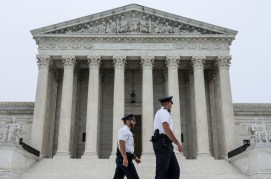
| The Supreme Court’s investigation of the leaked draft opinion Posted: 06 May 2022 10:00 AM PDT By Glenn Fine The leak of Supreme Court Justice Alito's draft opinion was an egregious breach of trust that damages the Court. Ultimately, the most important aspect of this incident will be the final opinion itself, and its impact on Roe v. Wade. But whatever one thinks about the merits of the draft opinion, the leak undermines the integrity of the Court and public trust in it. Justice Roberts' statement after the leak rightly called the leak a betrayal and an affront to the Court. He also directed the Marshal of the Court to launch an internal investigation into the source of the leak. Unfortunately, the Marshal's office does not seem to have the experience or expertise in this type of investigation. The relatively new Marshal, Colonel Gail Curley, is a veteran Army officer and lawyer. As described in a Court press release announcing her appointment last year, the Marshal serves "as the Court's chief security officer, facilities administrator, and contracting executive, managing approximately 260 employees, including the Supreme Court Police Force, which provides security for the Justices, Court staff, visitors, the building, and surrounding grounds. [The Marshal will] call the Supreme Court to order in argument sessions, maintaining order and decorum during Court proceedings." But the Marshal's office does not conduct these types of sensitive leak investigations. And the Court does not appear to have a cadre of seasoned investigators who handle complex investigations regularly. While Chief Justice Roberts' statement provided no details on how the investigation would be conducted, according to press reports he has rejected suggestions that he ask for investigative aid from the Department of Justice (DOJ) or the FBI. This situation is why I argued in an op-ed in the Washington Post in January 2022 that the federal judiciary needed an experienced, professional, permanent internal investigative office—an inspector general. I noted that, like the federal judiciary, other institutions such as the DOJ and the FBI had initially resisted the need for an inspector general, but over time these organizations came to recognize the value of an inspector general to handle sensitive investigations. The same applies to the judiciary. Any large institution, even the judiciary with its focus on ethics and the rule of law, inevitably faces problems. Unfortunately, that big problem has arrived, even sooner than expected. And the Court is not well positioned to address it. In particular, leak investigations are notoriously difficult to solve. I supervised them as the inspector general of the Department of Justice and the acting inspector general of the Department of Defense. Initially, when we were informed about a particular leak, we would be told that the universe of people with access to the leaked information was very small—only a few individuals—and that the leaked material had been closely held. Invariably, when we probed, the universe of people who had access to the information expanded exponentially. The actual universe was not only the few people in the key meeting or those who had worked directly on the leaked document. Rather, many other people had access to the leaked information or the document, from additional co-workers, to office staff, to computer administrative staff, to family and friends of those working on the matter, even to people who passed through the office. In addition, while it was sometimes possible to ascertain how many people, and who, had access to a document and also had contact with the reporter, we were usually unable to prove that a specific contact with the reporter led to the leak. Absent an admission or careless leaker who left tell-tale clues or who used technology that could be scrutinized to send the document, sufficient evidence to solve the leak was rare. It was not impossible, but it was unusual. We would often end up with theories and speculation on who had leaked the information, but not definitive proof. The Justice Department is understandably reluctant to go after reporters through subpoenas to investigate the reporter's source. I doubt that any reporter would comply with such a subpoena. Most would choose to go to jail, for a long-time if necessary, rather than divulge the reporter's source. To increase the likelihood of success in a leak investigation, it is important to have experienced investigators, who have done this before, ready to hit the ground running, to take rapid investigative steps to preserve evidence and determine the extent of the universe with access to a document, to scrutinize technology, and to quickly consider and pursue various investigative techniques. It is also helpful for the experienced investigators to be familiar with the organization's personnel and procedures, rather than learning about them as the investigation progresses. Unfortunately, the Supreme Court does not have a permanent, experienced investigator who understands the Court and its procedures and who regularly investigates these types of complex matters. The Supreme Court seems to be past the era when a breach of trust like this would be unfathomable, and when it could handle its problems quietly. Again, to be clear, the leak of the draft opinion is not the most important aspect of this event—the opinion itself is, whatever that turns out be. But this breach of trust should also spur the Court to accept the need for a permanent inspector general for the federal judiciary. This posting includes an audio/video/photo media file: Download Now |
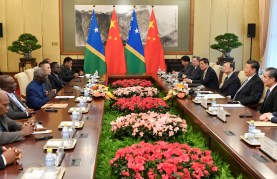
| Does the China-Solomon Islands security pact portend a more interventionist Beijing? Posted: 06 May 2022 06:53 AM PDT By Patricia M. Kim The recent announcement of a new security agreement between China and the Solomon Islands has rattled leaders in Washington, Canberra, and other Indo-Pacific capitals who fear it opens the door to a Chinese military presence in the southern Pacific. Much of the attention has been on the deal's potential to lead to a Chinese military base on the island nation, and the power-projection capabilities the People's Liberation Army (PLA) would gain as a result. But the new pact raises another critical question that has received less attention: is China is reentering the business of militarily propping up friendly regimes? While Beijing is no stranger to serving as an economic and diplomatic lifeline to close partners, it has largely eschewed providing direct security assistance to other states since the second half of the Cold War, for both pragmatic and principled reasons. Although it remains to be seen how precisely Beijing and Honiara will operationalize their new security pact, a looming question is whether this agreement will prove to be an exception or if it heralds the rise of a more activist China that is now willing to extend military support to other states in its concerted search for allies. If the latter turns out to be the case, there may be sweeping geostrategic consequences, including heightened incentives for rogue actors and regimes to play off Washington and Beijing in pursuit of their parochial interests, the erosion of democratic governance and norms, and greater volatility in the global arena as a result. Is China entering a new chapter of interventionism?According to the leaked draft of the security agreement between China and the Solomon Islands, Beijing has agreed to send armed police, military personnel, and other law enforcement forces to assist Honiara in "maintaining social order, protecting people's lives and property, and providing humanitarian assistance." The draft text also states that China, with the consent of Honiara, can use its forces to protect Chinese personnel and projects, and for its ships to stopover and carry out "logistical replenishment" in the Solomon Islands. While firmly denying that the agreement allows for a Chinese naval base, Prime Minister Manasseh Sogavare has characterized the new security pact with Beijing as necessary for countering the "hard internal threats" facing his country. Sogavare has made the case that the Solomon Islands' existing bilateral security treat with Australia, which was most recently activated last year following anti-government protests in the capital, has proven "inadequate." Beijing's commitment to help Honiara "maintain social order" through a bilateral agreement is quite striking because while Chinese security personnel have been dispatched to foreign conflict zones in recent years, they have usually been sent under the auspices of a United Nations peacekeeping operation or as part of multinational law enforcement efforts focused on combating terrorism and criminal activities such as piracy and drug trafficking, rather than with the mandate of keeping a particular government in power. Chinese leaders often emphasize that their country is a "new type of major power" that opposes militarily interventions. In fact, Chinese leaders and elites tend to believe that the United States' misadventures as a global security provider have contributed to its decline, and insist China has no interest in taking on such a role. Nevertheless, Beijing has increased its peacekeeping and law enforcement activities abroad over the past two decades to both strengthen China's image as a "responsible power," and to advance its narrower interests in protecting Chinese citizens and investments abroad; extending its extraterritorial reach to monitor and extradite Chinese nationals in foreign settings; and securing its borders from extremist groups. Beijing's new deal with Honiara is motivated by many of these same objectives. The desire to protect Chinese citizens and businesses was likely a large factor given that recent unrest in the Solomon Islands targeted Chinese businesses and was driven in part by Sogavare's decision to formally recognize China instead of Taiwan. The opportunity to extend the PLA's reach into a strategically important theater was undoubtedly a decisive factor as well. But the fact that Beijing agreed to provide direct security assistance to help a foreign government defend against "internal threats" in exchange for advancing Chinese interests indicates a potentially alarming shift in China's modus operandi, which until now has primarily involved the extension of loans, investments, and other economic incentives, rather than direct intervention in civil conflicts, to win friends and influence in the global arena. In addition, the leaked draft agreement explicitly states China may send the People's Armed Police (PAP) to engage in law enforcement activities. The PAP is the Chinese Communist Party's paramilitary force with a primary mission to maintain internal stability inside China. The PAP's duties include relatively benign assignments such as providing disaster relief and protecting government compounds, as well as more notorious ones such as suppressing "mass incidents" throughout the country and "maintaining order" in regions like Xinjiang and Tibet. Although there are instances of PAP forces being dispatched beyond China's borders for joint counterterrorism initiatives with neighboring states such as Tajikistan and Afghanistan, and in relatively small numbers as part of U.N. peacekeeping missions, its deployment abroad to keep a particular regime in power would be unprecedented. How China's growing security activism could change the geostrategic landscape, and implications for U.S. policyTo be certain, China is not the only player helping maintain internal stability in the Solomon Islands. Australia, New Zealand, and other Pacific states have sent police and troops to the island nation for peacekeeping purposes since the early 2000s. Canberra most recently faced criticism from protestors for deploying forces to combat unrest at Sogavare's request and giving a "moral boost" to the incumbent government. Nor would China be the first great power to use its military might to keep friendly foreign regimes in power. But Beijing's deal with Sogavare has come under scrutiny by opposition forces in the Solomon Islands and other regional stakeholders for its complete lack of transparency and allegations of corruption. The potential for the deployment of PAP forces to the region also raises concerns about the use and spread of Beijing's repressive domestic security practices and technologies outside China's borders. Given the secretive nature of the China-Solomon Islands agreement and what is likely vague language that is open to interpretation if the final text is akin to the draft version, it will be critical to watch how Beijing and Honiara ultimately implement their security deal. For instance, Beijing may choose to narrowly protect Chinese citizens and businesses in the case of renewed unrest and otherwise remain above the fray, or it may elect to lean in heavily to provide decisive security support to keep its favored party in power. If Beijing chooses the latter model, and this serves as a precedent for deals with other partner states going forward, it could very well set into motion destabilizing dynamics unseen since the Cold War when two competing blocs sponsored rival regimes around the world. Such a development would be devasting for democratic governance and norms, global prosperity, and much needed international coordination to address pressing challenges like climate change and nuclear nonproliferation. The United States has been criticized for overlooking the Solomon Islands for decades and coming "too late" to the region, jeopardizing its longstanding interest in preserving a free and open Indo-Pacific and ensuring no rival power creates exclusionary zones or uses the Pacific to threaten the security of the United States or its allies and partners. While the past cannot be undone, the Biden administration has promised to deepen engagement with Pacific island nations going forward and to assist these states with pressing 21st century challenges including addressing climate change, COVID-19 vaccines, and illegal fishing. Delivering on these commitments while ensuring partner states are not treated simply as pawns in a geopolitical battle will be essential for preserving the United States' influence and soft power in the region. In addition, long-term investments in capacity building to strengthen democratic norms, civil society, the free flow of information, and media literacy in the Pacific islands — as elsewhere — will be just as, if not more critical, so that leaders and citizens can effectively scrutinize and better manage China's growing economic, diplomatic, and military presence in their region. This posting includes an audio/video/photo media file: Download Now |
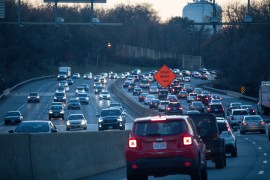
| Greater Washington’s commuters continue to choose gridlock Posted: 06 May 2022 06:10 AM PDT By Jaclene Begley, Leah Brooks, Brian J. McCabe, Jenny Schuetz, Stan Veuger Over the past two years, the COVID-19 pandemic has disrupted real estate markets and urban spaces in new and profound ways. Increased work-from-home has boosted demand for larger homes in suburban markets, vacancy rates in downtown offices and retail have spiked, and fewer daily commuters and more flexible work schedules have changed transportation patterns. While there is still considerable uncertainty about how many employers will stick with remote or hybrid work in the long run, policymakers who oversee transportation systems are faced with a number of challenges on how to provide safe, reliable, and affordable options that connect people to jobs, schools, shopping, and entertainment. This year's State of the Capital Region report examines commuting patterns and transportation infrastructure and asks: How do residents of the Washington, D.C. metro area get to work? How has this changed over time? And how should policymakers plan for future investments? (Note: Our report does not study travel for non-work trips, which constitute more than half of all trips.) Four in five Washington-area commuters drive to work—and that number hasn't changed in half a centuryOver the past 50 years, the Washington, D.C. metro area has more than doubled in population, and with that increase has come substantial investment in transportation infrastructure. Construction on the region's Metrorail system began in 1969, service began in 1976, and the vast majority of its 91 stations were open by the late 1990s. Yet the share of commuters who take public transportation versus those who drive to work has barely budged over this time: Around 80% of commuters still drive alone or carpool, compared to around 15% who ride public transit (Figure 1). Even so, the Capital Region has much higher transit ridership than most U.S. cities; only New York has more transit rides per capita.
COVID-19 has devastated public transit ridershipPublic transit ridership in most U.S. cities has suffered a gut punch over the past two years, as more downtown office workers shifted to work-from-home or hybrid models. Prior to the pandemic, employment in the Washington, D.C. region was highly centralized, with a large share of the region's jobs—especially those in government and professional services—located near the downtown core. Metrorail's hub-and-spoke system was designed to carry workers from their suburban homes to that downtown core, as well as to supporting businesses like coffeeshops, restaurants, and bars. Tourists relied on Metrorail to access centrally located hotels, museums, and entertainment venues. The federal government—a major downtown office tenant—still has not recalled most of its workforce to the office, while many businesses in the urban core have shuttered. The loss of economic activity is reflected in continuing low ridership. Rail trips are at approximately 40% of January 2020 levels, while bus ridership is around 65% (Figure 2). Notably, bus riders have lower average incomes and are less likely to own cars than commuters who take rail, making them more dependent on transit services. Many lower-paid essential workers—including staff at health care facilities, pharmacies, and grocery stores—depended on public transit throughout the pandemic. Ridership has recovered some from the trough in July 2020, and may rise further as public health concerns recede.
Transit ridership was declining for a decade before COVID-19Taking a longer view, Metrorail ridership had been declining gradually for a decade before the pandemic hit. Annual trips peaked in 2010 around 350 million and had fallen to about 300 million by 2019. Riders and transit observers cite a number of problems with the agency during this period, including unreliable and infrequent service and safety hazards. Another notable development during these years was the rapid expansion of ride-sharing services such as Lyft and Uber; these companies can act both as substitutes for public transit and as complements, fixing the so-called "last-mile problem," or the gap between riders' home and transit stations.
There are several ways to interpret the decade-long decline in transit ridership. On one hand, we could view it as consumers voting with their feet in the transportation marketplace and moving away from public transit toward more preferred options. But there are broader regional economic, social, and environmental consequences to commuters' individual choices. Moving commuters in individual cars (especially sole-occupant vehicles) requires much more physical space compared to shared buses or trains. Smaller shares of transit riders mean more traffic congestion and longer commute times for everyone. The transportation sector is one of the largest contributors to greenhouse gas emissions and localized air pollution; more drivers and fewer transit riders leads to worse air quality and more negative health outcomes in the region. Owning and maintaining a car is expensive; these costs are especially onerous for low- and moderate-income households. And finally, not everyone is legally or physically able to drive; children, people with disabilities, and older adults are among the groups who are most reliant on non-car transportation. The costs of poorly functioning transit systems fall hardest on low-income householdsThe critical challenge for policymakers in the Capital Region and other large cities is how to provide reliable, climate-friendly transportation options for all residents—including people who cannot afford to own cars or cannot drive—within the existing fiscal framework. Maintaining fixed-infrastructure transit systems (notably, subway and commuter rail) with declining ridership will be increasingly expensive. Reducing service frequency and reliability to cut costs will push more commuters away from transit—as the recent experience with removing Metrorail's 7000-series cars has demonstrated. The counties and cities that make up the Capital Region face limits on their fiscal capacity (and taxpayers' willingness to pay), yet federal support is politically uncertain. The burdens of bad public transit fall hardest on low-income households, who have more difficulty carrying the costs of car ownership, tend to live far from major job centers, and are less likely to have remote work options. Therefore, policy decisions on transit service have important equity implications. This report focuses only on home-to-work commuting patterns; non-work trips are an important area for further study. Expanded work-from-home may drive more demand for locally serving retail and food service in residential areas throughout the Capital Region. If so, local governments should consider how to make it easier and safer for people to access these services by non-car means, such as walking and biking. This posting includes an audio/video/photo media file: Download Now |


| You are subscribed to email updates from The Supreme Court’s investigation of the leaked draft opinion. To stop receiving these emails, you may unsubscribe now. | Email delivery powered by Google |
| Google, 1600 Amphitheatre Parkway, Mountain View, CA 94043, United States | |


No comments:
Post a Comment