In his first presidential press conference last Thursday, Joe Biden stressed America’s need to confront China, Russia, and other authoritarian regimes. “I predict to you,” Biden told reporters, “your children or grandchildren are going to be doing their doctoral thesis on the issue of who succeeded: autocracy or democracy.” To win, the U.S. will need to reestablish alliances with other liberal countries. “We have to have democracies working together,” he said.
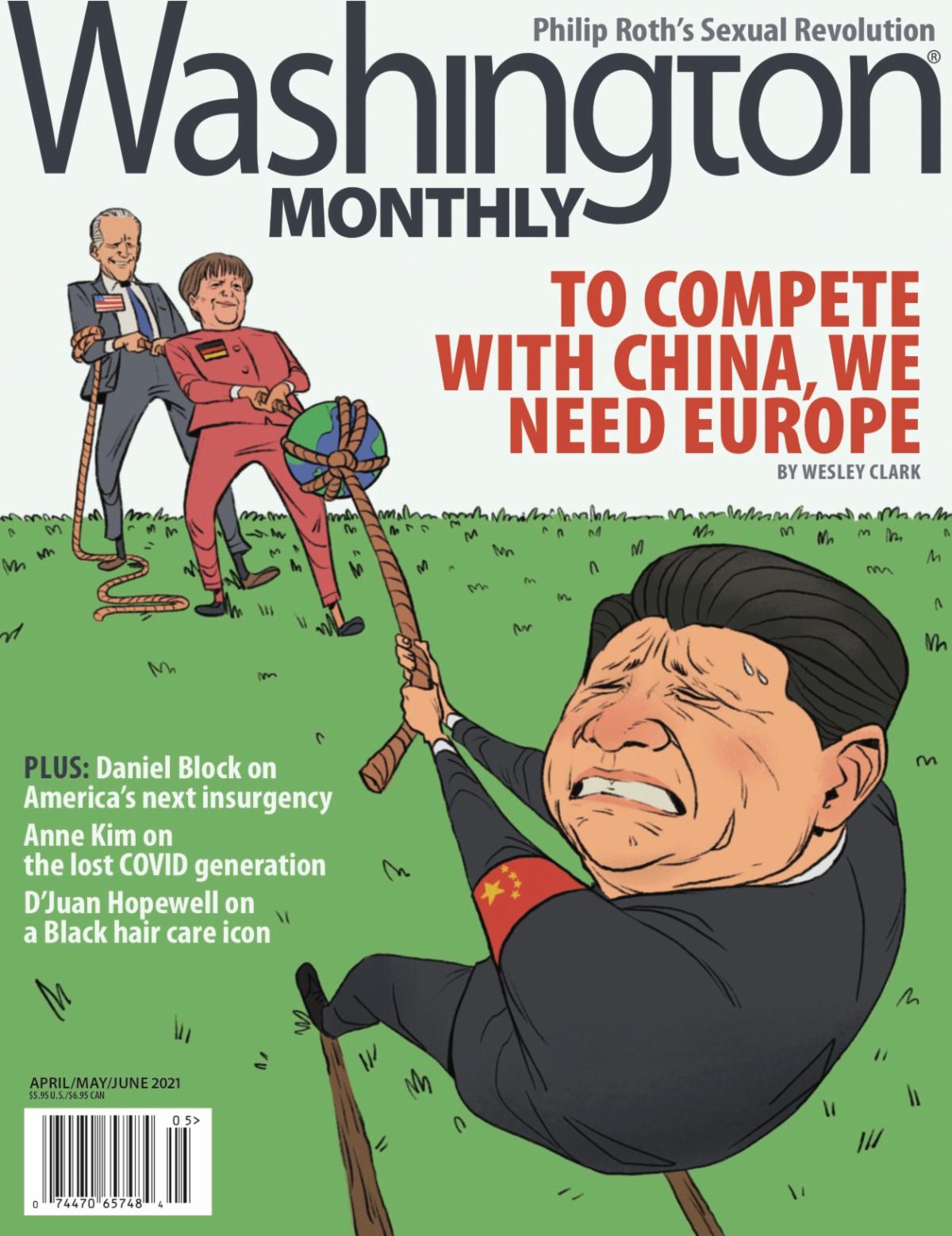
Biden is right. But the question is how to get the major democracies to work together. In the upcoming issue of the Washington Monthly, former NATO supreme allied commander Wesley Clark proposes a visionary answer: a NATO-like binding agreement for the economies of the United States, the European Union, and the United Kingdom.
Under this agreement, the transatlantic democracies would more closely coordinate their policies on climate, labor, antitrust, and technology transfer to counter the predations of tyrannical states like China while reversing the economic gutting of the middle and working classes that breeds right-wing populism here and around the world. Trumpian fears of China, Clark argues, might motivate some GOP support for such an agreement. If not, it could be negotiated as a trade deal. Under the fast-track process, trade deals cannot be filibustered, which would allow Democrats to pass it on their own.









No comments:
Post a Comment